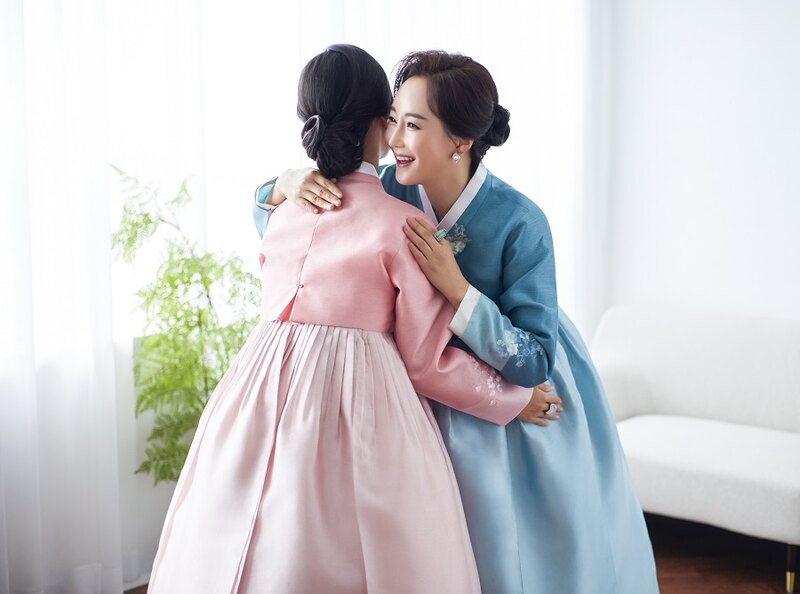
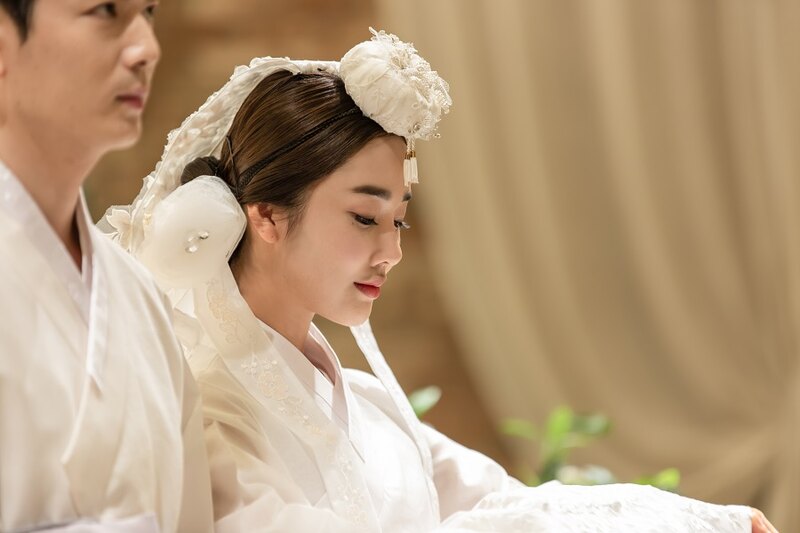
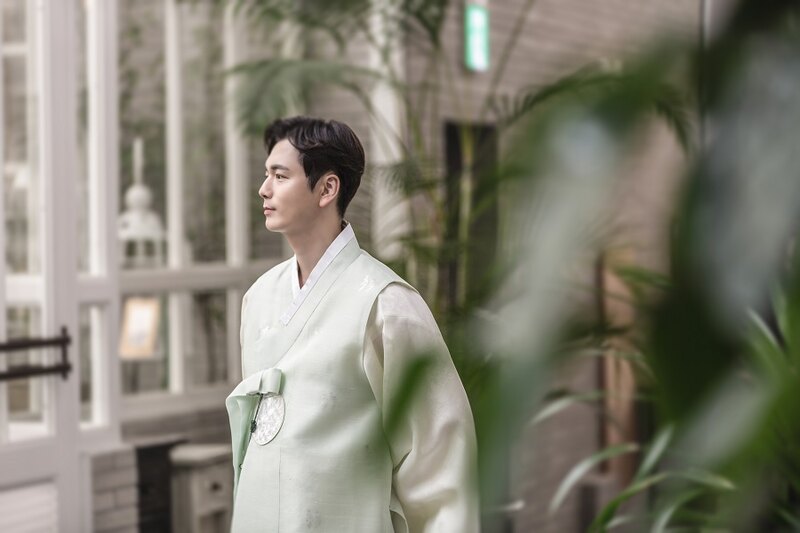
What a Hanbok Is Made Of
How jeogori, chima, baji and durumagi fit together, and what every part of a hanbok is actually called.
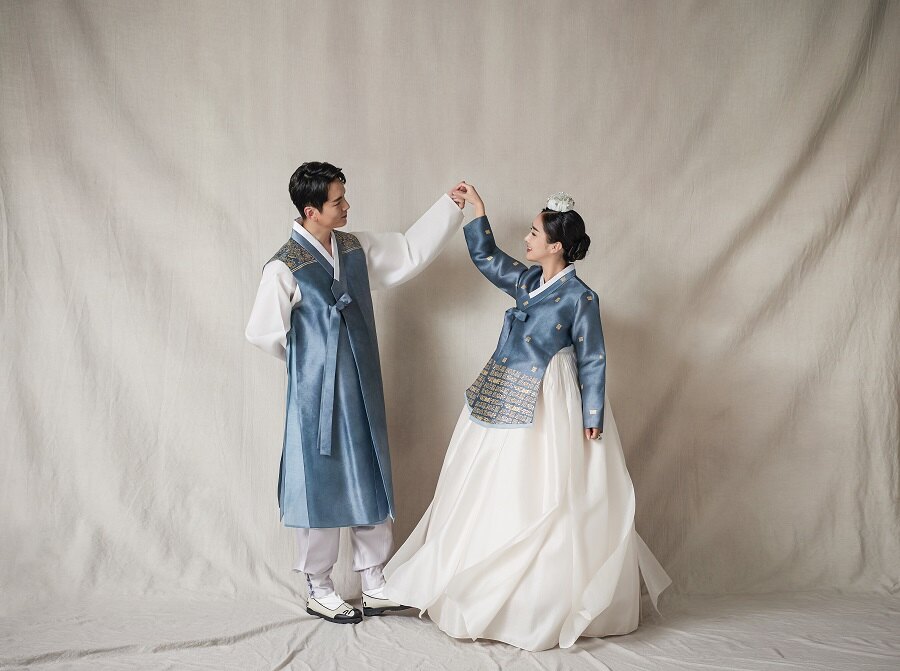
A hanbok looks like it has many components, but the number of actual garments is small. The Encyclopedia of Korean Culture defines traditional hanbok as chima, jeogori, baji and durumagi, with the jokki and magoja included — the last two being late-nineteenth-century additions. Nearly everything else you will hear named is a part of one of those.
The garments in a set
- Jeogori (저고리), the short upper jacket that wraps the torso and arms and closes at the front. Everyone wears one, whatever their age or gender.
- Chima (치마), the women's wrap skirt, cut wide and gathered into soft pleats.
- Baji (바지), the men's trousers, full through the leg and closed at the ankle.
- Durumagi (두루마기), the long coat worn over everything else.
- Jokki (조끼) and baeja (배자), the sleeveless vests, and magoja (마고자), a sleeved, collarless jacket fastened with buttons — the layers that go over the jeogori.
The parts of a jeogori
- Gil (길), the front and back body panels.
- Git (깃), the collar band that frames the neck.
- Dongjeong (동정), the narrow white strip stitched along the top edge of the git.
- Seop (섶), the panel below the git that lets the front cross over itself.
- Baerae (배래), the underarm line of the sleeve, curved out like a fish's belly.
- Goreum (고름), the pair of ties that hold the front closed, short on the right and long on the left.
- Kkeutdong (끝동), a cuff of contrasting cloth at the wrist, found on some women's jeogori.
Skirt and trousers
A chima is made of its skirt panels, a waistband and the waist ties. Malgi (말기) is the word for that band at the top of either a skirt or a pair of trousers. A baji is cut from panels called marupok (마루폭) and sapok (사폭) joined to a waistband, and the cuffs are gathered at the ankle with cords called daenim (대님). Haengjeon (행전), tubular wraps drawn up the shin and tied just below the knee, were often added over the tied cuffs.
The outer layer
Durumagi carries the sense of being closed all the way round; in hanja it is 주의 (周衣). Side panels called mu (무) close up the open sides, and the hem falls about 20–25 cm above the ankle, around mid-calf. The magoja is generally traced to 1885, when the Heungseon Daewongun returned from confinement in Qing China wearing a Manchu magwae (마괘). (The Encyclopedia of Korean Culture's magoja entry gives 1887, but his release and return are dated 1885.) The jokki is thought to have appeared around 1900, as Western dress arrived.
Order and direction
- Women: sokbaji and sokchima (under-trousers and underskirt), then beoseon (버선) socks, then the chima, then the jeogori.
- Men: beoseon, baji, jeogori, jokki, magoja, durumagi.
- The jeogori closes with the left seop lying over the right. This is called uim (우임, 右衽): the right panel goes underneath, so the closure line runs toward the wearer's right. The reverse, jwaim (좌임), is used only when dressing the dead.
- For the goreum, lay the short right tie over the long left one and knot once. Fold the lower tie into a loop, wind the short tie around it, and draw the end through.
The chima's opening sits at the back, but which way the outer panel wraps has varied by period and social group, and sources still disagree. Wearing one is the fastest way to make the names stick.