How to Put On a Woman's Hanbok
From under-trousers and socks to which way the skirt wraps and how the jeogori ties, in the order they go on.
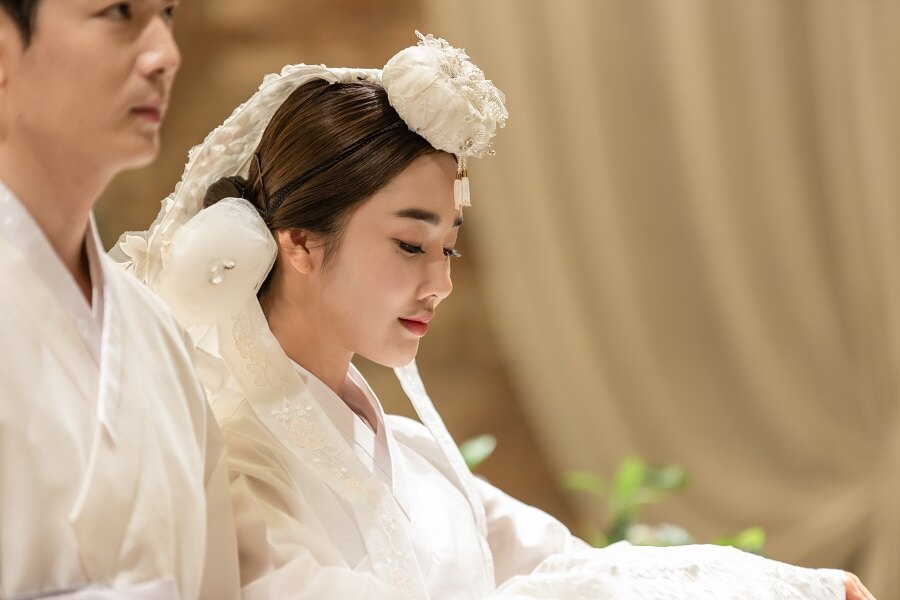
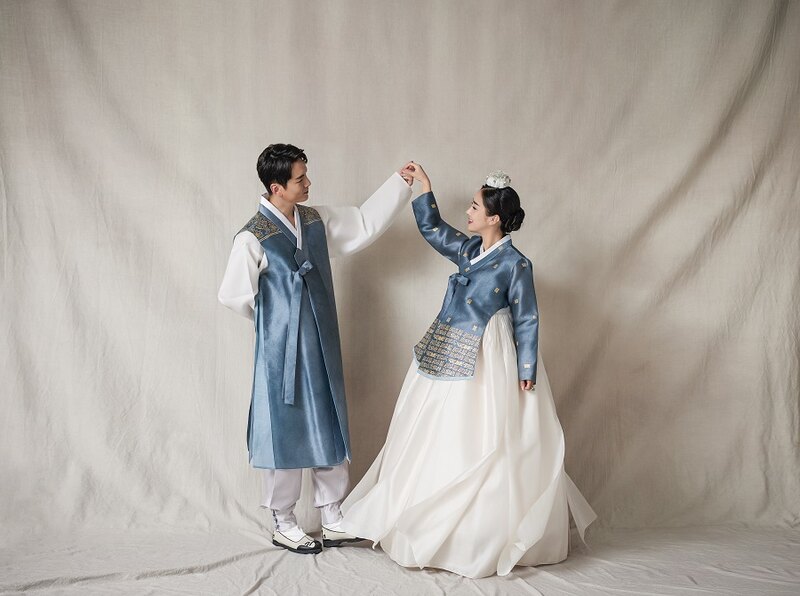
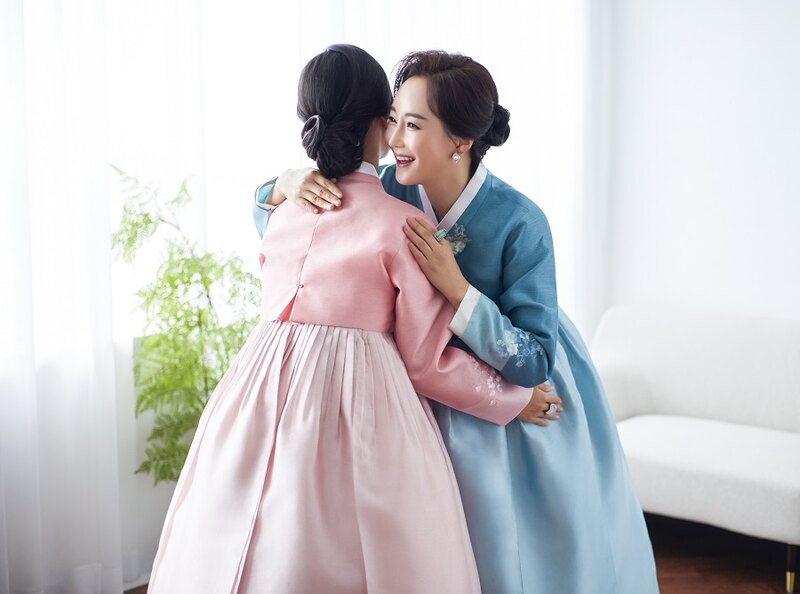
A woman's hanbok (한복), Korean traditional dress, goes on from the inside out and the bottom up. Skip a step and the skirt rotates on the body while the jacket slides backwards. The sequence below follows the pieces that normally come together in a rental set.
Under-trousers, underskirt, socks
- Sokbaji (속바지), the wide under-trousers, go on first. They stop the skirt clinging to the legs and hold its line as you walk.
- Sokchima (속치마), the underskirt, goes over them. Cut two or three centimetres shorter than the outer skirt, its hem stays hidden below the outer hem.
- Beoseon (버선), the shaped Korean socks, are easier to manage before the skirt. They are left and right: the seam allowance of the sunuk (수눅), the centre seam running up to the toe, faces outward.
The chima wraps at the back
The chima (치마), the wrap skirt, closes behind you rather than at the side. Centre the opening on your spine, bring the right panel up and across so its edge finishes on your left, and tie the waist ties above the bust. Keeping the knot slightly off centre stops it bulking under the jacket. Korean dress guides treat this direction as standard and explain it as leaving the right hand free for work while the left held the panel. Joseon practice was not uniform, though, and the same sources record kisaeng wrapping the opposite way to sadaebu households. The shoulder straps on most skirts today, the eokkaeheori (어깨허리), were devised at Ewha Haktang in 1914 and spread through the 1910s and 1920s to stop the skirt slipping; older skirts had only a waistband and ties.
The jeogori and the goreum
- Close the jeogori (저고리), the short upper jacket, with the left front panel (섶, seop) lying over the right. This right-facing closure is called uim (우임).
- Pull the jacket forward until the dongjeong (동정), the white band stitched along the collar, touches your neck, then line the two collar edges up.
- Take the two goreum (고름), the ribbon ties sewn to the front of the jacket. Lay the short one over the long one and knot it once.
- Make a round loop with the short goreum and pass the long one through it.
- Draw the long goreum to the left while pulling the short one down, then let both hang straight.
The Traditional Culture Portal also publishes the reverse method, in which the long goreum forms the loop and the short one wraps around it.
Settling the fit
Pull the jeogori forward so the shoulder seams do not drift behind you, and fold the slack across the chest diagonally, from the side of the neck toward the armpit. A baeja (배자), the sleeveless over-vest, can go over the jeogori for warmth; going outdoors, the durumagi (두루마기), the long overcoat, goes on last of all.
What the older layering looked like
Joseon women wore far more beneath the skirt: darisokgot (다리속곳), soksokgot (속속곳), sokbaji and dansokgot (단속곳), layer on layer. Formal dress added a mujigi (무지기), twelve widths of ramie in an odd number of tiers, three, five or seven, to push the skirt out at the waist. Sources give slightly different sequences for these layers. Today's two pieces are what is left of that stack, and an afternoon in a hanbok teaches the order faster than any description.