Which Hanbok Fits Which Occasion
Who wears what at a Korean wedding, pyebaek, first birthday and holiday, and where the practice genuinely varies.
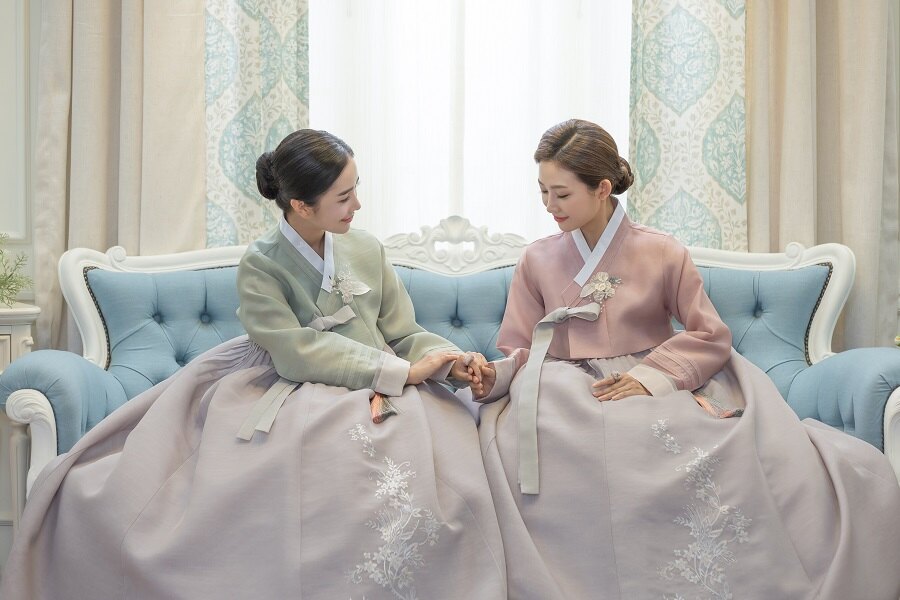
Hanbok is chosen by role and occasion before it is chosen by taste. The jeogori (저고리), the short upper jacket, and the chima (치마), the wrap skirt, stay much the same; what changes is the layer over them and the piece on the head. Here are the five occasions Koreans dress for most often.
The wedding: bride and groom
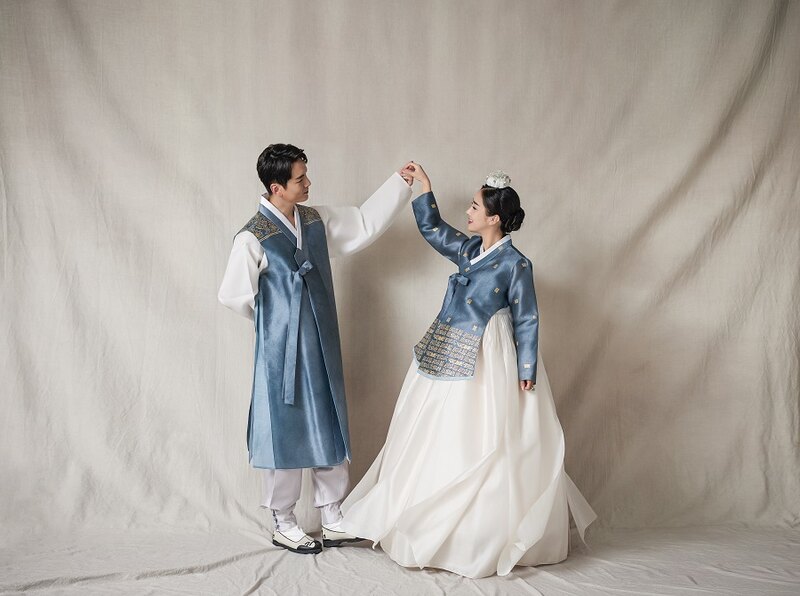
The groom wore samogwandae (사모관대): the samo (사모), a Joseon official's winged black cap, over a dallyeong (단령), the round-collared robe an official wore on duty, with mokhwa (목화) boots. A groom with no office could still wear the rank badge and belt that day. The bride put on a deep-red chima and a pink inner jeogori, added a green or a yellow jeogori over it, then a wonsam (원삼) or a hwarot (활옷) — both wide-sleeved ceremonial coats, the hwarot densely embroidered on a red ground. Wonsam usually went with the small jokduri (족두리) cap and hwarot with the hwagwan (화관) coronet, but colour, coat and cap were chosen family by family. Both coats carried white hansam (한삼) cuff extensions and a red daedae (대대) sash.
Honju: the two sets of parents
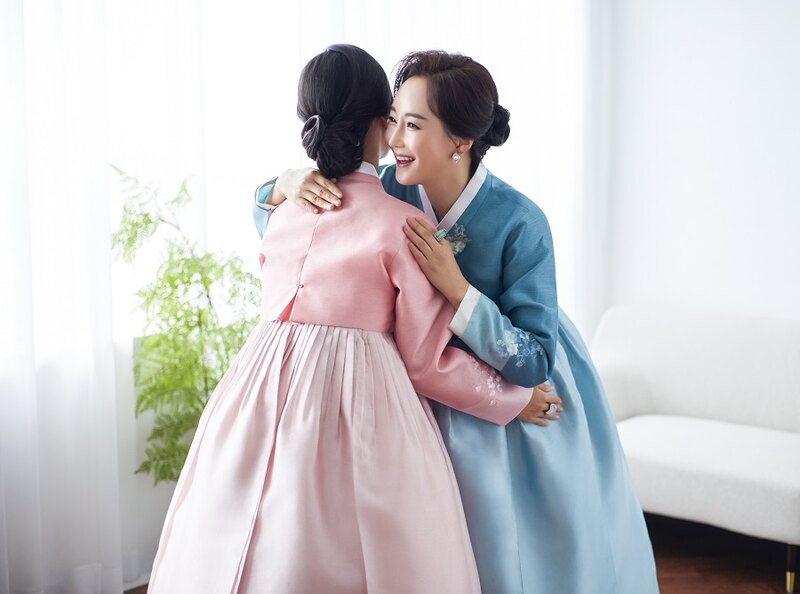
Honju (혼주) are the parents hosting the wedding. The rule everyone repeats is that the groom's mother wears blues and the bride's mother reds. It is a custom, not a codified etiquette: it is explained through yin-yang balance, or through a folk saying about raising a son upright and a daughter warm. Most families now settle the palette between themselves. A 2021 study of 271 photographs of women's honju hanbok jeogori published between 2010 and 2019 found 229 (84.5%) were banhoejang jeogori (반회장저고리), which take a contrasting fabric only at the collar, cuffs and ties. Add a contrasting panel under the arm and it becomes a samhoejang jeogori (삼회장저고리).
Pyebaek
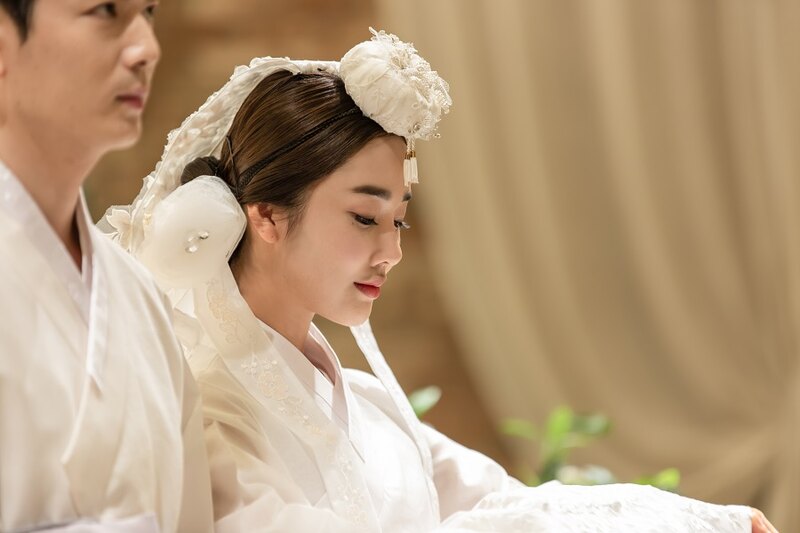
Pyebaek (폐백) is properly hyeongugorye (현구고례), the bride's first formal greeting to her husband's parents. She offered jujubes and chestnuts to her father-in-law and dried meat, yukpo or pyeonpo, to her mother-in-law. The ritual manuals disagree on the rest: some prescribe two bows, others four, and the seating of the parents differs from text to text. One records the father-in-law tossing the jujubes back to the bride. She wore the full hwarot or wonsam, or the lighter dangui (당의), a long jacket with a rounded hem and white cuffs, in which case she covered her hands with a long hansam to bow.
The first birthday
Dolbok (돌복) varied with what a household could afford, but it was always coloured and complete from headwear to shoes.
- Boys: pungchabaji (풍차바지), split-back trousers, with a pink jeogori or one with saekdong (색동) striped sleeves, a vest and a magoja (마고자) jacket, then an obangjang durumagi (오방장두루마기), a coat pieced in five colours, or a sleeveless jeonbok (전복), and a plain bokgeon (복건) or tiger-faced hogeon (호건) cap.
- Girls: a red chima and saekdong jeogori under a dangui or a striped durumagi, with a gulle (굴레) or jobawi (조바위) bonnet.
- The doltti (돌띠) waist sash: navy for boys and purple for girls in some accounts, red for both in others.
Surveys record strong regional habits too: pale-blue jeogori for boys in South Jeolla, yellow-green saekdong in Andong, North Gyeongsang.
Holidays
Clothes newly made for a holiday are called bim (빔) — seolbim for Lunar New Year, danobim for Dano, chuseokbim for Chuseok. A girl's New Year outfit was typically a yellow jeogori with a deep-red chima; for Chuseok the saying runs pink jeogori, navy chima. Adults generally skip the ceremonial layers and wear a well-cut jeogori with chima or trousers, in a fabric suited to the season. Saekdong on children's clothes is read as gathering the five directional colours to keep bad luck away, though some hold it began as a thrifty way to use up offcuts.
Whatever the occasion, the last step is the goreum (고름), the pair of ties. Knot the long tie from the outer collar side together with the short tie from the inner side so the short one sits on top, then make a loop with the long tie, wrap the short tie once around it, and pull the short tie through behind the loop. It all makes more sense once you have a set on.